Launching Your Online Course for Profit
You’ve built it and now it’s time: launching your online course for profit. You’ve refined your lessons, recorded your videos, and chosen your platform. Now comes the exciting part. Launch day.
But if you’re like most first-time creators, the launch phase can feel overwhelming. How do you price your course? When should you open enrollment? How do you make sure people actually see it?
Here’s the truth: successful launches aren’t about having a huge audience or running endless ads. They’re about structure. With the right pricing, strategy, and systems, your course can reach the right students, earn consistent revenue, and continue growing long after the first sale.
This guide walks you through how to launch, market, and scale your online course with confidence. You’ll learn how to set profitable pricing, design a launch plan that builds anticipation, automate your marketing, and refine your course for long-term growth.
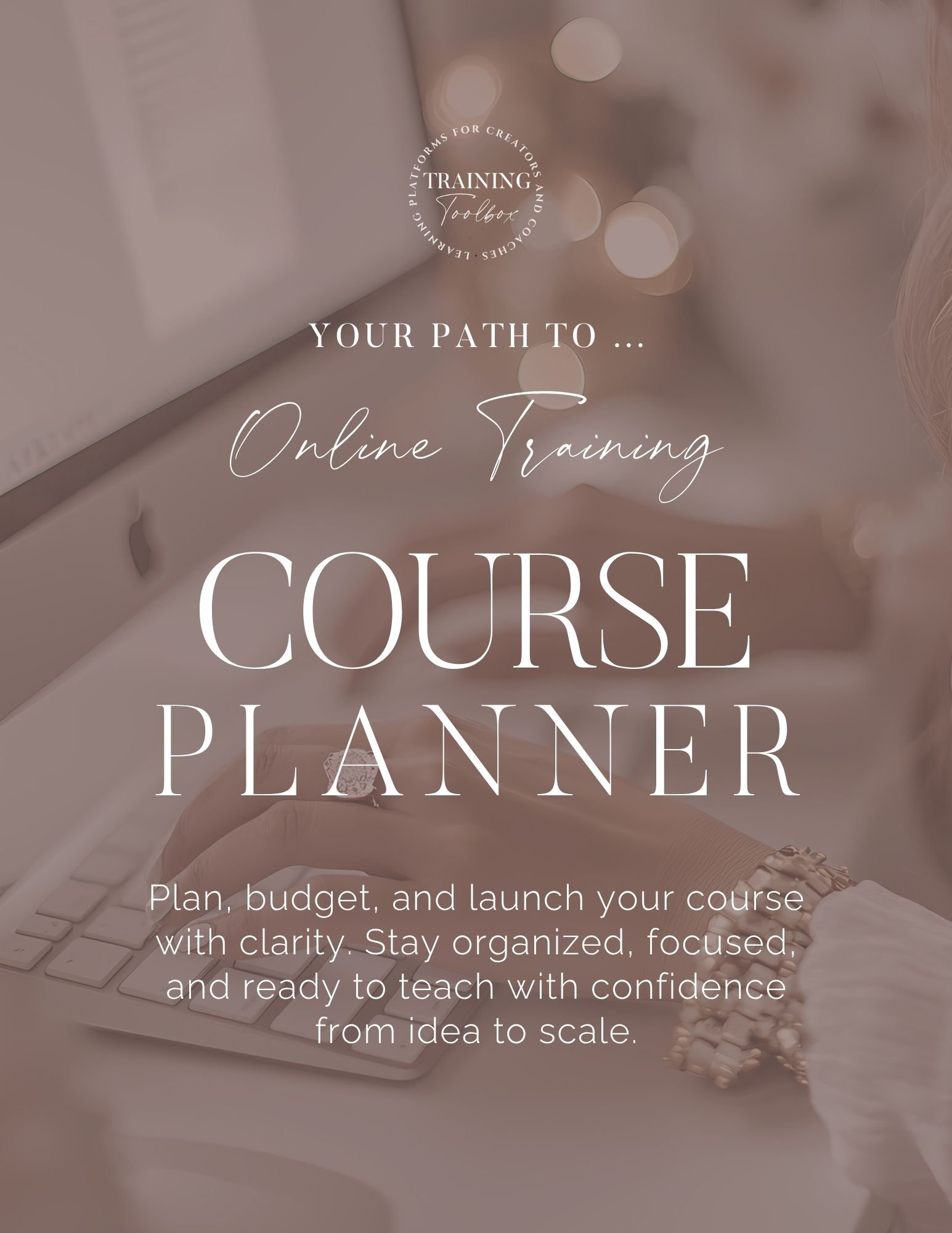
And to keep the entire process organized from start to finish, download the free Course Planner. It’s a practical companion that helps you track tasks, timelines, and goals at every step.
plan, launch and scale
Get our printable Course Planner free today via Email.
Step 1: Price for Profit and Accessibility
Pricing is more than a number — it’s a message. It tells your audience what your course is worth and how confident you are in its value. The goal isn’t to be the cheapest option; it’s to be the clearest and most compelling.
Start by thinking about your transformation. Students aren’t paying for hours of content — they’re paying for a result. If your course helps someone land a job, start a business, or save time, that transformation has real financial and emotional value.
Value-Based Pricing
Start from your outcome. Estimate the real-world benefit your students receive and price accordingly. A course that saves someone ten hours a week or helps them earn new clients should reflect that value.
Benchmark and Compare
Spend time reviewing similar courses in your niche. Look for patterns: entry-level courses might start around $49–$99, mid-tier programs often range between $199–$499, and premium courses or coaching hybrids can easily reach $1,000+. Use those benchmarks to find your starting point.
Tiered Pricing
Consider offering more than one option. A self-paced version for independent learners, a mid-tier version with group coaching, and a premium tier with one-on-one feedback. Tiered pricing gives your audience flexibility and increases overall conversions.
Discounts vs. Bonuses
Avoid racing to the bottom with constant discounts. Instead, reward early enrollments with bonuses — like extra templates, a private session, or bonus modules. These add perceived value without lowering your price.
Test and Refine
Start modestly. Launch at a fair entry price, collect testimonials, and raise your rate as your results and confidence grow. Your pricing will evolve as your reputation and community expand.
A profitable price reflects both your course’s transformation and your confidence as a creator. When your pricing aligns with your results, students recognize the value — and your sales increase naturally.
Step 2: Plan a Smart Launch Strategy
A smooth launch is all about timing, communication, and consistency. Think of it as a three-phase process: Pre-Launch, Launch Week, and Post-Launch. Each phase has a purpose, and together they create momentum that builds trust and excitement.
Stage 1: Pre-Launch
Build Awareness and Connection
Your pre-launch phase starts at least three weeks before opening enrollment. This is when you build anticipation and trust.
Start by offering value. Share helpful content related to your course topic — short videos, mini guides, or live Q&As. Teach small but meaningful lessons that give people a taste of your expertise.
Next, grow your email list. Offer a free resource or a short challenge related to your course. The goal is to gather people who are already interested so you can nurture them before the launch.
Behind the scenes, start talking about the process. Show your audience sneak peeks of your course outline or recording setup. People love feeling part of your journey — it builds connection before they ever see a sales page. Download our free Social Media Planner for step-by-step help.
Stage 2: Launch Week
Drive Enrollment with Purpose
When launch week arrives, shift from building anticipation to making clear, confident offers. Focus on connection, not pressure.
Send a short series of emails throughout the week. The first introduces your course and what it helps people achieve. The next shares a story, transformation, or testimonial. The final email creates urgency with a closing date or limited bonus.
On social media, keep your content consistent. Post student success stories, behind-the-scenes clips, or a “countdown to close.” Use these to remind and encourage — not to overwhelm.
If you’re offering early-bird pricing or limited enrollment, highlight those details clearly. Urgency works best when it feels fair, not forced. Social media can help you spread the word.
Stage 3: Post-Launch
Keep Engagement High
Your launch doesn’t end when the cart closes. In fact, this is where long-term growth begins.
Send thank-you messages to your new students and a follow-up email to those who didn’t buy. Offer a short freebie or a reminder to join your list for the next opening. Share early feedback publicly — it builds excitement for future rounds.
A smart launch strategy builds connection and credibility before asking for a sale. When you focus on trust and timing, your course launch feels natural — and your audience is more excited to join.
Step 3: Automate and Scale Your Marketing
Once your course has launched successfully, automation becomes your best friend. It’s not about replacing connection — it’s about saving time and staying consistent. Email sequences are the perfect solution and a snap to set up.
Email Sequences That Work for You
Build a simple automation flow: welcome sequence → nurture sequence → sales sequence. Each step helps your audience move from awareness to action. Keep your tone conversational and focused on benefits, not features. The template below will get you started.
Welcome Email Sequence Templates
Here are welcome emails you can save and edit for your own use:
Email 1 – Deliver the Freebie + Set Expectations
Subject: Your free guide is ready 🎉
Preview: Start planning your course today
Body:
Hi [First Name],
Thanks for joining! Here’s your download:
👉 [Access Your Free Planner / Workbook / Checklist Here]
Inside, you’ll find simple prompts to organize your ideas and start building your course structure.
Over the next few emails, you’ll get short tips to help you:
Clarify your course topic
Build lessons that flow
Prepare for a smooth launch
For now, open the file and fill out the first page — you’ll feel instantly clearer about where to begin.
Talk soon,
[Your Name]
Email 2 – Give a Quick Win
Subject: A 10-minute exercise that changes everything
Preview: Start validating your idea today
Body:
Hi [First Name],
Here’s a simple 3-step exercise that can save you weeks of second-guessing:
1️⃣ Write your course idea in one clear sentence.
2️⃣ List three real questions your audience has about it.
3️⃣ Ask five people which topic excites them most.
This quick test shows you what people actually want to learn — and gives you confidence to move forward.
If you already did it, reply and tell me your topic. I’d love to hear what you’re creating.
Best,
[Your Name]
Email 3 – Build Connection with a Story or Lesson
Subject: You don’t need a big audience to launch
Preview: Here’s what matters more
Body:
Hey [First Name],
Here’s a secret most new creators overlook: small, focused audiences convert better than big, distracted ones.
One coach I know launched her first mini-course to just 60 people — and sold out — because she knew exactly who she was helping and what result they wanted.
Start where you are. A clear message and consistent action beat follower counts every time.
What’s one thing you can teach right now that would truly help your audience? Write it down — that’s the seed of your first module.
Cheers,
[Your Name]
Email 4 – Invite Engagement or Next Step
Subject: Ready to take your next step?
Preview: Here’s how to keep your momentum
Body:
Hi [First Name],
You’ve clarified your topic and started shaping your outline — great work. The next step is turning your plan into action.
Here are two ways to keep moving:
✅ Block two hours this week to film or draft your first lesson.
✅ Review your planner and set a simple launch goal — a date, a format, and a price range.
Small actions compound quickly.
If you’d like more structure, open your free planner again — pages 5–7 walk you through lesson mapping and time tracking.
Keep going,
[Your Name]
Measure and Improve
Use analytics to track what’s working. Pay attention to your email open rates, sales conversions, and completion rates. These numbers tell you what to adjust next time. Automation isn’t about removing the human touch — it’s about freeing you to focus on what matters: teaching, connecting, and refining your craft.
Step 4: Optimize for Long-Term Growth
A great launch can build momentum, but consistent growth comes from refinement. Each course cycle gives you data — and that data becomes your best teacher.
Listen and Improve
After each launch, collect student feedback. Ask what worked well and what could be clearer. Update lessons, fix confusing sections, and add resources that support better results.
Expand Your Offer Ladder
Once your first course performs well, consider what comes next. You could bundle courses, offer advanced modules, or introduce coaching sessions for graduates. Scaling is easier when you already have satisfied students eager to keep learning.
Create a Community
Consider adding a private group or online community to increase engagement. A simple space where students can ask questions or celebrate wins strengthens loyalty and retention.
Move Toward Evergreen Sales
Once your launch process works, you can automate it into an evergreen funnel — meaning your course sells year-round. You’ll still update and improve regularly, but your system will run on autopilot.
Scaling doesn’t mean doing more — it means improving what already works. Small refinements after each launch lead to exponential growth over time.
Final Thoughts
Launching and scaling your online course isn’t about overnight success — it’s about steady growth through structure and consistency. When you price with confidence, plan intentionally, and automate smartly, your course becomes more than a product. It becomes a sustainable business that grows with you.
The secret is to stay organized. That’s why the Course Planner was designed to help creators like you plan every phase — from pre-launch tasks to scaling strategies — all in one place. Inside, you’ll find space for your timelines, launch notes, and post-launch reflection pages to keep everything running smoothly.
Download your free Course Planner today and keep your next launch focused, clear, and stress-free.
Remember — the first launch is just the beginning. Every round gets easier, every system gets stronger, and every student you help becomes part of your success story.